Everything Looked Right at the Beginning
I have been in that room, where everyone is excited, the leader is fully on board, and the whole team feels like they are finally going to get this right. A new platform has just been chosen, the framework looks solid on paper, and the right people are in the room.
We all start with the best of intentions.
So where did it go wrong?
When Momentum Replaces Thinking
Somewhere between the kickoff meeting and the first governance review, the program took on a life of its own. The catalog kept growing, the policies kept multiplying, and the technology that was supposed to simplify things ended up adding more layers than anyone planned for.
In all of that activity, the business stopped asking questions and started waiting. Waiting for value that was always just one more phase away.
It is usually a senior leader who has been quietly watching who finally leans back and asks the question that changes everything: does any of this actually make sense?
Not the idea of governance. The idea always makes sense. But the way we are doing it, the sheer weight of it. Over time, we started building for governance and stopped building for people.
When Gut Feel Replaces Good Data
I sat with a business team not long ago who had built a good size data product inventory. But the business users were questioning the data that was being provisioned into these products. Where is this data coming from? Who has decided what good quality looks like here? Has anyone checked if the quality, privacy and security expectations are actually being met?
Without clear answers, the data products sat there, built and available, while the leaders in that room were quietly making decisions based on their gut feel because the data they had could not answer the questions their own team would ask.
The real cost of governance that does not make sense is not a failed audit or a compliance issue. It is a room full of capable people who stopped trusting the data that was built for them.
Where Things Finally Click
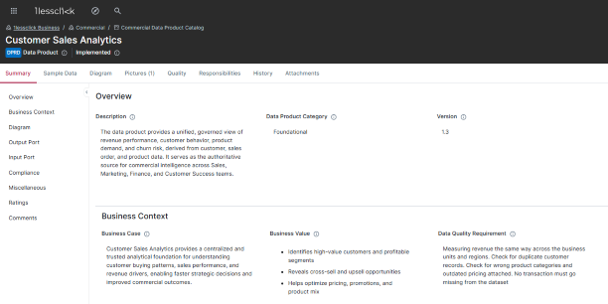
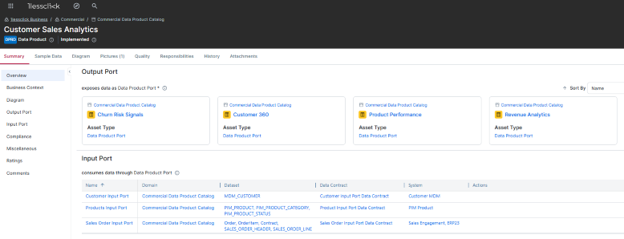
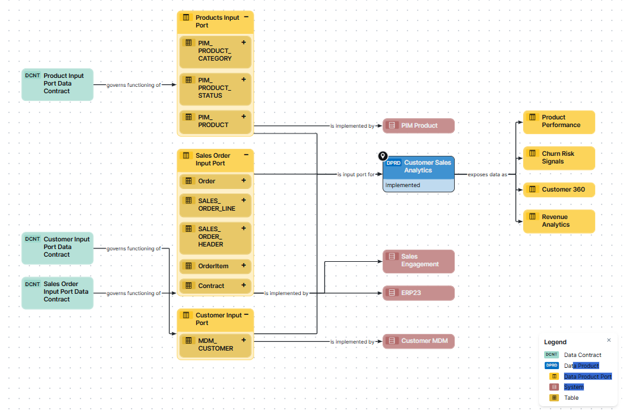
This is what a data product looks like in Collibra when those questions actually have answers.
Effective Data Governance Rarely Raises Its Voice
Good governance does not announce itself. It is embedded in our daily work. The people who need data can find it without asking three colleagues. The business questions get answered without a week of back and forth.
Data governance is genuinely complex and anyone who has tried to make it work knows the effort it takes. That complexity belongs inside the design of the program, not in the hands of the people who simply need good data to do their jobs.
The closer data gets to a real business decision, the more it has to speak the language of that decision. Business context is not a nice label on an asset. It is what makes data understandable, trustworthy and useful to the people who depend on it every single day.
Common Sense Is Not a Given
The Japanese philosopher Yoritomo Tashi wrote that enthusiasm is as brittle as crystal, but common sense is as durable as brass.
Common sense is not a soft skill. In data governance it is the hardest thing to hold onto. It is easy to harvest metadata, build workflows, add a policy or standard, another layer of process. It is much harder to step back and ask whether any of it is actually working for the people it was built for.
At 1lessclick, I always start by asking what is really causing the pain. Not what the framework says the answer should be, but what is actually getting in the way of good data reaching the right people at the right time.
Data governance is everyone’s responsibility. But it only becomes everyone’s reality when it makes sense to everyone involved.
Does yours?